48 Hours in Athens: A Relaxed Two‑Day Itinerary
A practical 48-hour Athens itinerary: the Acropolis and its museum, Plaka, Monastiraki, Syntagma, Lycabettus, Kolonaki, Koukaki and an evening drive.
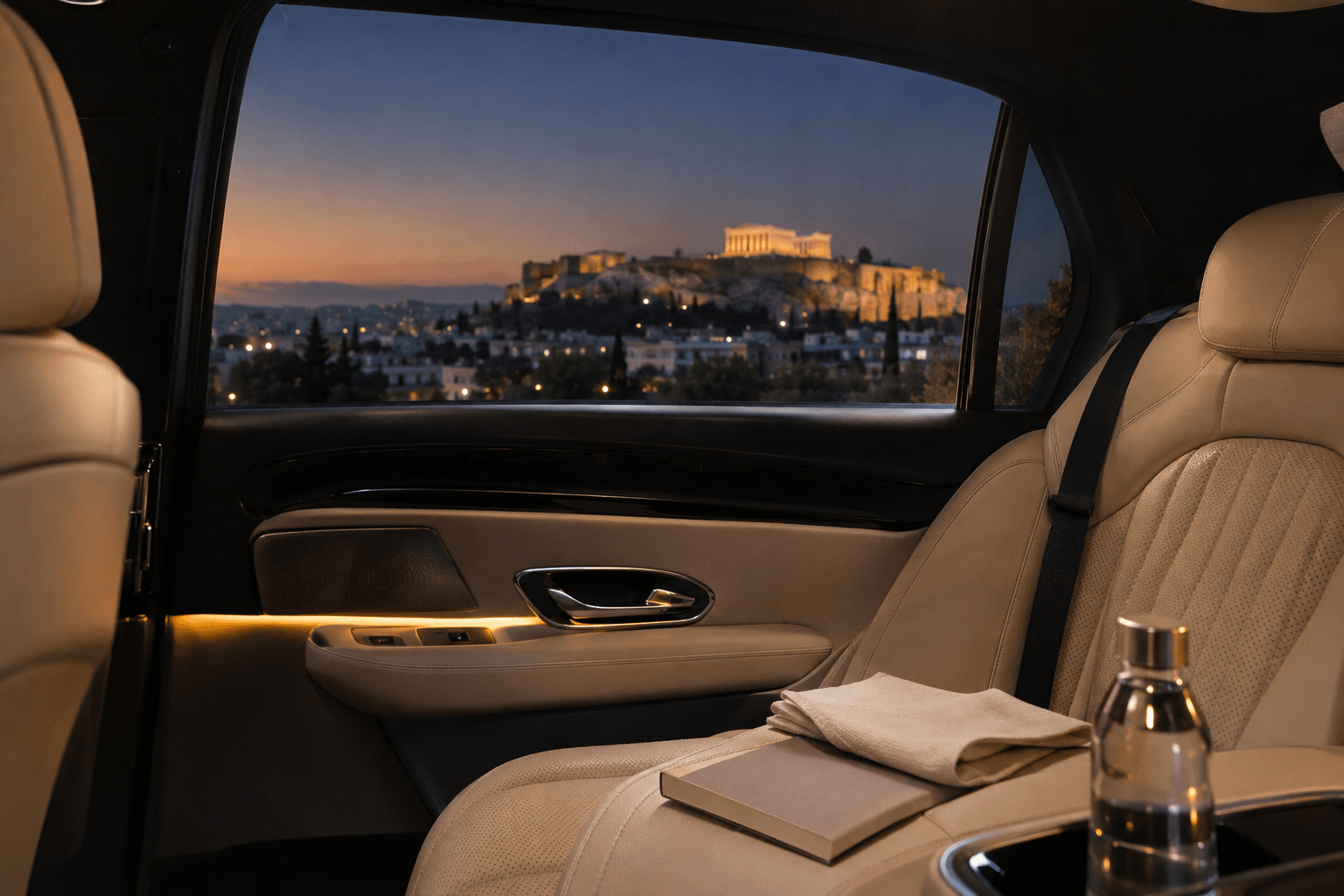
Two days is not long in a city with thousands of years of history, but it is enough to see the essentials and get a real feel for Athens. The historic centre is compact, many of the main sights are within walking distance of one another, and the neighbourhoods each have a distinct character. This itinerary keeps the pace comfortable, groups sights that sit close together, and leaves room for long lunches and evenings outdoors.
Before you start
Wear comfortable shoes with good grip, as the marble paths around ancient sites can be smooth and uneven. In the warmer months, plan outdoor sightseeing for the morning and late afternoon, and carry water. Booking timed tickets for the Acropolis in advance is sensible, particularly in high season.
Day one: the ancient heart of the city
Morning: the Acropolis
Start as early as you can. The Acropolis draws large crowds, and arriving at the start of the day means cooler temperatures and a calmer atmosphere. You enter through the Propylaia, the monumental gateway, and come out onto the rock beside the Parthenon, built in the fifth century BC and dedicated to Athena. Take time over the Erechtheion with its porch of Caryatids, and the views across the city to the sea.
Allow around two hours on the hill. From the bottom, the pedestrian walkway of Dionysiou Areopagitou curves around the southern slope and leads directly to the museum.
Late morning: the Acropolis Museum
The Acropolis Museum opened in 2009 at the foot of the hill. Glass floors at the entrance look down onto excavated remains of the ancient city, and the galleries hold sculptures and objects found on and around the Acropolis. The top floor, the Parthenon Gallery, is aligned with the temple itself, which is visible through the glass walls. Plan on one and a half to two hours, and consider lunch at the museum or in the surrounding streets.
Afternoon: Plaka and Anafiotika
Walk north into Plaka, one of the oldest neighbourhoods in central Athens, with its neoclassical houses, small churches and shaded squares. Above Plaka, on the northern slope of the Acropolis, is Anafiotika. This cluster of whitewashed houses and narrow lanes was built in the nineteenth century by builders from the Cycladic island of Anafi, and it still feels more like an island village than a capital city. Wander slowly, as the lanes are steep and quiet.
Evening: Monastiraki and Psyrri
Continue down to Monastiraki Square, where the flea market streets are busy until the evening. Several rooftop bars nearby look straight across to the illuminated Acropolis, which is a fine way to end the first day. For dinner, the neighbouring district of Psyrri has a wide choice of tavernas and modern Greek restaurants, many with tables outside.
Day two: squares, hills and neighbourhoods
Morning: Syntagma and the National Garden
Begin at Syntagma Square, opposite the Hellenic Parliament. In front of the Parliament, at the Tomb of the Unknown Soldier, the Evzones of the Presidential Guard perform the changing of the guard at regular intervals throughout the day, with a more elaborate ceremony on Sunday mornings. Afterwards, walk through the National Garden, a shady refuge beside the Parliament, to the Zappeion and on to the Panathenaic Stadium, the marble stadium that hosted the first modern Olympic Games in 1896.
Afternoon: Kolonaki and Lycabettus
Kolonaki, on the slopes above Syntagma, is the city’s most polished neighbourhood, with boutiques, galleries and busy cafés. It is a good place for a relaxed lunch. From the upper part of Kolonaki, a funicular climbs through a tunnel to the top of Lycabettus Hill, or you can walk up by a winding path. At the summit stands the small chapel of Agios Georgios, and the view takes in the whole of Athens, from the Acropolis to the Saronic Gulf. Late afternoon, as the light softens, is the best time to be there.
Evening: Koukaki and an evening drive
For your final dinner, head to Koukaki, a residential neighbourhood just south of the Acropolis. It has a relaxed, local feel, with neighbourhood restaurants, wine bars and cafés. After dinner, an evening drive is a fine way to close the trip. You can loop past the floodlit monuments of the centre, or head south to the coast for a late drink by the sea. If you have an extra half-day, the drive to Cape Sounion is described in our guide to the Athenian Riviera and Sounion.
Where a private driver helps
Central Athens is very walkable, and most of this itinerary can be done on foot. A driver is most useful at the edges of the trip and in the evenings:
- Arriving and departing. Getting from the airport to your hotel, or from your hotel to a ferry or flight, is simpler with luggage in a car.
- Saving energy between sights. A short drive between Syntagma, Kolonaki and Koukaki can make a long day in the heat more comfortable.
- The evening drive. Seeing the city lit up from the coast road, or heading out to the Riviera, is easier when nobody has to navigate or park.
- Families and groups. A larger vehicle keeps everyone together and makes it easy to adjust plans as the day goes on.
- Going further. Day trips beyond Athens, to Sounion or elsewhere in Greece, fit neatly around a short stay.
Athenian VIP Transfers operates Mercedes-Benz sedans, including the E-Class, alongside V-Class vans and VIP Sprinter minibuses for larger parties, and covers Athens and the rest of Greece.
Plan your journey
If you would like a driver for your arrival, an evening drive or a day beyond the city, you can request a transfer with your dates and plans. Tell us what you would like to see, and the timings can be arranged around your itinerary.